
Mt. Vernon Music
Mount Vernon Music Concert February 21, 2026
Greenville Chamber Music Society
Greenville Municipal Auditorium
String Quartet F major op. 96 (American) Antonín Dvořák (1841-1904)
Lento
Songs of a Sourdough Stephen Lias (1966-)
Five Songs for baritone and piano with texts by Robert Service
I. The Heart of the Sourdough
II. The Lure of the Little Voices
III. Premonition
IV. Grin
V. L’Envoi
Where You Love From (2022) Jessica Meyer (1999-)
for narrator, percussion, violin, viola, and cello
commissioned by The Michael Steinberg and Jorja Fleezanis Fund
1. Look inside and find
2. You’ve so distracted me
3. In your light
4. Drumsound rises on the air
5. The ocean’s generosity
Intermission
Selections from Spirituals Harry Burleigh (1866-1949)
for baritone and piano
1. Little David Play on Your Harp
2. Deep River
3. Go Down Moses
4. Sometimes I Feel Like a Motherless Child
5. Every Time I Feel The Spirit
Quintet for Percussion and String Quartet Menachem Wiesenberg (1950-)
Leon Turner, baritone
Benjamin Loeb, piano
Drew Lang, percussion
Mark Miller, violin
Andres Bravo, violin
Ute Miller, viola
Bree Ahern, cello
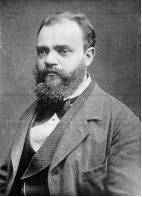
While it may be relatively well known that Antonín Dvořák wrote some of his best-loved music, pieces like the New World Symphony, the Cello Concerto and the “American” String Quartet, while living in this country, that knowledge begs for more explanation. What motivated the renowned Czech composer to spend a solid three years in the United States? The answer to that question lies in a fascinating story that perfectly illustrates MVM’s twentieth season premise of “What If?” It is a story, like all American stories, that begins with an immigrant.
Henry Meyers was a Danish violinist who came to America from his native Copenhagen in the mid-1800’s. In 1850 he and his wife welcomed a baby daughter whom they named Jeanette. Henry wished to give Jeanette the best chance for musical development, and since they had the financial means, when she was a teenager her parents sent her to France to study at the Conservatoire de Paris. Jeanette returned home and married a successful businessman, but her experience in Paris stayed with her, and she wondered “What if we in America had a national conservatory the way they do in France?” She believed that America, like other industrialized western countries, needed its own national style of music, its own voice. And she believed the way to achieve that was with a music school offering outstanding education, with federal support. So, between sponsoring both New York City’s first Wagner festival and the New York debut of the Boston Symphony, Jeanette Thurber founded the National Conservatory of Music of America, which opened its doors in 1885 on West 25th Street. She understood that success in attracting talent depended on having outstanding faculty, so she brought in international stars like Belgian baritone Jaques Bouhy, who was the first to sing the role of Escamillo in Bizet’s Carmen. And just two decades after the American Civil War, the National Conservatory was admitting female students, students of color, and students with disabilities. From its first year with a class of 84, enrollment steadily grew to 3,000 by the turn of the century. In 1892, after writing to him six times, she finally succeeded in recruiting Dvořák to be director of the school. Actually, Dvořák’s wife looked at the yearly salary offer, which was more than $500,000 in today’s money and 25 times (!) what the composer was earning at home, and insisted he accept the appointment.
Dvořák had made it his mission at home to liberate his native culture from the ever-present shadow of German and Austrian dominance. He was fascinated by the possibilities in the U.S., and identified with Thurber’s quest for a national musical character. One day in the conservatory building, he heard one of the students, 26-year-old African-American Harry Burleigh, singing spirituals as he mopped the floors to help pay for his tuition. Utterly captivated, he later wrote “In the Negro melodies of America I discover all that is needed for a great and noble school of music. They are tender, passionate, melancholy, solemn, religious, bold, merry, gay or what you will. It is music that suits itself to any mood or purpose. There is nothing in the whole range of composition that cannot be supplied with themes from this source. The American musician understands these tunes and they move sentiment in him.”
Dvořák’s words were applauded by Black musicians, and caused no small buzz in international circles. Predictably, the responses ranged from enthusiastic agreement to condescension and bigotry, like the ignorant comment by Anton Bruckner that "German musical literature contained no written text emanating from the Negro race, and however sweet the Negro melodies might be, they could never form the groundwork of the future music of America." For his own part, Dvořák made his time in America very productive, spending much of 1893 in the Czech community in Spillville, Iowa, where he composed his String Quartet in F “American,” whose slow movement we hear today, and the New World Symphony, with their unmistakable reference to the Black spirituals he so admired.
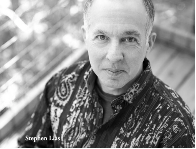
Songs of a Sourdough was composed by Stephen Lias as “…a manly five-movement set with texts by Robert Service*…exploring life in the Yukon.”
The music of adventurer-composer Stephen Lias is regularly performed in concert and recital throughout the world by soloists and ensembles including the Arianna Quartet, the Anchorage Symphony, the Rochester Philharmonic, the Maryland Symphony, the Ensamble de Trompetas Simón Bolívar, the Boulder Philharmonic, and the Russian String Orchestra. His music is published by Alias Press, and distributed worldwide exclusively by Theodore Presser. His pieces are regularly featured at major national and international conferences including the International Trumpet Guild, the North American Saxophone Alliance, and the ISCM World Music Days. Lias served for eleven years as Composer in Residence and Music Director at the Texas Shakespeare Festival.
Stephen's passion for wilderness and outdoor pursuits has led to a sizable series of works about the national parks of the US. He has served as Artist-in-Residence at Rocky Mountain, Glacier, Denali, Mount Rainier, Glacier Bay, Bering Land Bridge, and Gates of the Arctic National Parks, and has written over two dozen park-related pieces that have been performed in such far-flung places as Colorado, New Hampshire, Texas, China, Alaska, Sydney, and Taiwan. In 2017, his All the Songs that Nature Sings was commissioned by the Boulder Philharmonic with a grant from the National Endowment for the Arts and performed at Washington D.C.’s Kennedy Center for the Performing Arts. Stephen is the creator of The Composers Site (now operated by Vox Novus) and the founder and leader of the annual Composing in the Wilderness program offered by the Fairbanks Summer Arts Festival and Alaska Geographic.
Stephen Lias received degrees from Messiah College, Stephen F. Austin State University, and Louisiana State University. He is a Distinguished Arts Associate of Sigma Alpha Iota International Music Fraternity and a member of ASCAP, the College Music Society, the Society of Composers, Inc, and the American Composers Forum. He is the Texas delegate to the International Society of Contemporary Music. He currently resides in Nacogdoches, Texas where he is Professor of Composition at Stephen F. Austin State University. When not composing and teaching, Stephen enjoys reading, backpacking, kayaking, skiing, travel, and photography. (from the composer’s website)
*Verse by Canadian poet (the “Canadian Kipling”) Robert Service is heard now for the second time in MVM’s programming. To mark the 100th anniversary of the construction in 1907 of the old Central Christian Church that is now Mount Vernon Music Hall, on New Year’s Eve 19 years ago MVM presented a program of “greatest hits of 1907,” complete with a recitation of Service’s The Cremation of Sam McGee. Service had an uncanny knack for writing what he described as “something the man in the street would take notice of and the sweet old lady would paste in her album; something the schoolboy would spout and the fellow in the pub would quote. Yet I never wrote to please anyone but myself; it just happened.” Though his writings were an incredible commercial success, he had his detractors. Those included literary critics and some he had mocked in verse, like Hitler and the Kremlin (The Ballad of Lenin’s Tomb).
The Heart of the Sourdough, text by Robert Service
There where the mighty mountains bare their fangs unto the moon,
There where the sullen sun-dogs glare
in the snow-bright, bitter noon,
And the glacier-glutted streams sweep down
at the clarion call of June.
There where the livid tundras keep
their tryst with the tranquil snows;
There where the silences are spawned,
and the light of hell-fire flows
Into the bowl of the midnight sky, violet, amber and rose.
There where the rapids churn and roar,
and the ice-floes bellowing run;
Where the tortured, twisted rivers of blood
rush to the setting sun —
I’ve packed my kit* and I’m going, boys, ere another day is done.
I knew it would call, or soon or late,
as it calls the whirring wings;
It’s the olden lure, it’s the golden lure,
it’s the lure of the timeless things,
And to-night, oh, God of the trails untrod,
how it whines in my heart-strings!
I’m sick to death of your well-groomed gods,
your make-believe and your show;
I long for a whiff of bacon and beans,
a snug shakedown in the snow;
A trail to break, and a life at stake,
and another bout with the foe.
With the raw-ribbed Wild that abhors all life,
the Wild that would crush and rend,
I have clinched and closed with the naked North,
I have learned to defy and defend;
Shoulder to shoulder we have fought it out —
yet the Wild must win in the end.
I have flouted the Wild. I have followed its lure,
fearless, familiar, alone;
By all that the battle means and makes
I claim that land for mine own;
Yet the Wild must win, and a day will come
when I shall be overthrown.
Then when as wolf-dogs fight we’ve fought,
the lean wolf-land and I;
Fought and bled till the snows are red under the reeling sky;
Even as lean wolf-dog goes down will I go down and die.
The Lure of little Voices
There's a cry from out the loneliness — oh, listen, Honey, listen!
Do you hear it, do you fear it, you're a-holding of me so?
You're a-sobbing in your sleep, dear, and your lashes, how they glisten — Do you hear the Little Voices all a-begging me to go?
All a-begging me to leave you. Day and night they're pleading, praying,
On the North-wind, on the West-wind, from the peak and from the plain;
Night and day they never leave me — do you know what they are saying?
"He was ours before you got him, and we want him once again."
Yes, they're wanting me, they're haunting me, the awful lonely places;
They're whining and they're whimpering as if each had a soul;
They're calling from the wilderness, the vast and God-like spaces,
The stark and sullen solitudes that sentinel the Pole.
They miss my little camp-fires, ever brightly, bravely gleaming
In the womb of desolation, where was never man before;
As comradeless I sought them, lion-hearted, loving, dreaming,
And they hailed me as a comrade, and they loved me evermore.
And now they're all a-crying, and it's no use me denying;
The spell of them is on me and I'm helpless as a child;
My heart is aching, aching, but I hear them, sleeping, waking;
It's the Lure of Little Voices, it's the mandate of the Wild.
I'm afraid to tell you, Honey, I can take no bitter leaving;
But softly in the sleep-time from your love I'll steal away.
Oh, it's cruel, dearie, cruel, and it's God knows how I'm grieving;
But His loneliness is calling, and He knows I must obey.
Premonition
'Twas a year ago and the moon was bright
(Oh, I remember so well, so well);
I walked with my love in a sea of light,
And the voice of my sweet was a silver bell.
And sudden the moon grew strangely dull,
And sudden my love had taken wing;
I looked on the face of a grinning skull,
I strained to my heart a ghastly thing.
'Twas but fantasy, for my love lay still
In my arms, with her tender eyes aglow,
And she wondered why my lips were chill,
Why I was silent and kissed her so.
A year has gone and the moon is bright,
A gibbous moon, like a ghost of woe;
I sit by a new-made grave to-night,
And my heart is broken — it's strange, you know.
Grin
If you're up against a bruiser and you're getting knocked about -
Grin.
If you're feeling pretty groggy, and you're licked beyond a doubt -
Grin.
Don't let him see you're funking, let him know with every clout,
Though your face is battered to a pulp, your blooming heart is stout;
Just stand upon your pins until the beggar knocks you out -
And grin.
This life's a bally battle, and the same advice holds true,
Of grin.
If you're up against it badly, then it's only one on you,
So grin.
If the future's black as thunder, don't let people see you're blue;
Just cultivate a cast-iron smile of joy the whole day through;
If they call you "Little Sunshine," wish that they'd no troubles, too -
You may - grin.
Rise up in the morning with the will that, smooth or rough,
You'll grin.
Sink to sleep at midnight, and although you're feeling tough,
Yet grin.
There's nothing gained by whining, and you're not that kind of stuff;
You're a fighter from away back, and you won't take a rebuff;
Your trouble is that you don't know when you have had enough -
Don't give in.
If Fate should down you, just get up and take another cuff;
You may bank on it that there is no philosophy like bluff
And grin.
L’Envoi
You who have lived in the land,
You who have trusted the trail,
You who are strong to withstand,
You who are swift to assail:
Songs have I sung to beguile,
Vintage of desperate years,
Hard as a harlot's smile,
Bitter as unshed tears.
Little of joy or mirth,
Little of ease I sing;
Sagas of men of earth
Humanly suffering,
Such as you all have done;
Savagely faring forth,
Sons of the midnight sun,
Argonauts of the North.
Far in the land God forgot
Glimmers the lure of your trail;
Still in your lust are you taught
Even to win is to fail.
Still you must follow and fight
Under the vampire wing;
There in the long, long night
Hoping and vanquishing.
Husbandman of the Wild,
Reaping a barren gain;
Scourged by desire, reconciled
Unto disaster and pain;
These, my songs, are for you,
You who are seared with the brand
God knows I have tried to be true;
Please God you will understand.
With playing that is “fierce and lyrical” and works that are “other-worldly” (The Strad) and “evocative” (New York Times), Jessica Meyer is an award-winning composer and violist... Meyer’s first composer/performer portrait album, Ring Out (Bright Shiny Things, 2019) debuted at #1 on the Billboard Traditional Classical Chart. Her second album I long and seek after is a collection of her vocal works that was recently released in March of 2024 on New Focus Recordings and was hailed by Musical America as “gorgeously scored.”
Since the start of her composition career in 2014, at age 40, Meyer’s compositions have viscerally explored the wide palette of colors available to each instrument while combining techniques inspired by her experiences as a contemporary and period instrumentalist. Her works have been performed in venues from the Kennedy Center to Carnegie Hall, by musicians of the Minnesota Orchestra and the New York Philharmonic, and by orchestras around the country. Her first Symphonic Band piece was commissioned and toured by “The President’s Own” United States Marine Band and was a finalist for the William D. Revelli Composition Contest. She has also received multiple commissioning awards from both Chamber Music America and the New York State Council on the Arts.
Premieres have included performances by acclaimed vocal ensembles Roomful of Teeth and Vox Clamantis, the St. Lawrence String Quartet as the composer in residence at Spoleto Festival USA, the American Brass Quintet, PUBLIQuartet, HUB New Music, Dorian Wind Quintet, NOVUS NY of Trinity Wall Street, a work for A Far Cry commissioned by the Isabella Stewart Gardner Museum in Boston, the Juilliard School for a project with the Historical Performance Program, by the Lorelei Ensemble for a song cycle that received the Dale Warland Singers Commission Award from Chorus America, and her viola concerto GAEA that she premiered alongside the Orchestra of the League of Composers at Miller Theatre in NYC.
Recent premieres include a work for MET Opera tenor Paul Appleby and the Claremont Trio, a new orchestral piece “Turbulent Flames” that is being performed by a consortium of orchestras across the United States, and a commission for the Orpheus Chamber Orchestra to open their 2025-26 Carnegie Hall Season. (from the composer’s website)
Pro tip: Notice how this composer uses various techniques to get bows to produce unusual effects, from glassy-sounding sul ponticello right up against the bridge, to drawing the bow across the side of instruments to produce a breathy, hissing sound, to the percussionist’s use of a bow on what is otherwise a purely mallet instrument.
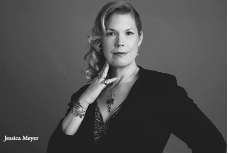
Jessica Meyer writes about Where You Love From: I fall in love with the power of words all over again when I read Rumi* (particularly this translation by Coleman Banks). The rich imagery makes my job a joy, for the sounds almost jump off the page and into my mind to play around with. This particular text speaks to me because it naturally has "movements" or episodes. Though they seem rather disjointed at first, I wanted to weave them together with a musical narrative about the nature of love and how allowing yourself to love beyond expectation can be a means to freedom.
As someone who sees the ocean as an inspiring life force, the last section particularly strikes me as a meaningful metaphor for what our various relationships could potentially be, and serves as a fitting climax to the piece. However, I chose to pose my own question to the audience via the narrator during the final moments of the work - "Where do you love from?” Most days, I feel our society could be in a better place if we just asked ourselves that question more often.
*Jalaluddin Rumi (1207-1273), Persian Sufi poet and mystic
Ode Where You Love From
Poetry by Rumi (1207-1273)
Translation by Coleman Banks from The Book of Love
(used with permission)
Look inside and find where a person
loves from. That’s the reality,
not what they say.
Hypocrites
give attention to form, the right
and wrong ways of professing belief.
Grow instead in universal light.
When that revealed itself, God gave it
a thousand different names, the least
of those sweet-breathing names being,
the one who is not in need of anyone.
*****
You’ve so distracted me,
your absence fans my love.
Don’t ask how.
Then you come near.
“Do not…” I say, and
“Do not…”, you answer.
Don’t ask why
this delights me
*****
In your light I learn how to love.
In your beauty, how to make poems.
You dance inside my chest
where no one sees you,
but sometimes I do, and that sight becomes this art.
*****
Drumsound rises on the air,
its throb, my heart.
A voice inside the beat says,
“I know you’re tired,
but come, this is the way.”
*****
Are you jealous of the ocean’s generosity?
Why would you refuse to give love to anyone?
Fish don’t hold the sacred liquid in cups!
They swim the huge fluid freedom.
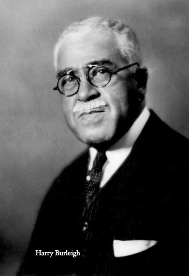
Harry Burleigh grew up in Erie, PA. His maternal grandfather had been enslaved in Maryland, but managed to buy his freedom after worsening eyesight interfered with his productivity as a laborer. As a boy, Harry learned spirituals when his grandfather sang as Harry guided him through the streets. Harry’s father was a veteran of the Union Navy. His mother was denied employment as a teacher in Pittsburgh public schools, and worked as a teacher in Black schools. Harry successfully auditioned for admission to the National Conservatory of Music of America in 1892, and arrived at the same time as its new director Antonin Dvořák. Burleigh wrote "I sang our Negro songs for him very often, and before he wrote his own themes, he filled himself with the spirit of the old Spirituals."
In 1894, Burleigh became a vocal soloist at the otherwise “whites only” St. George’s Episcopal Church in New York City, with J.P. Morgan casting the deciding vote to hire him over the opposition of some parishioners. Notwithstanding that challenging beginning, Burleigh went on to work for St. George’s for 52 years and became close to many in the congregation. His renditions of spirituals were legendary, and he grew in demand as a soloist. He performed throughout Europe and sang for King Edward VII in London. He also worked for the Italian music publisher Ricordi, both in their New York and Milan offices. He sang in Hebrew, Latin, Italian, French and German. Prominent singers he coached included Enrico Caruso, Roland Hayes, Marian Anderson, and Paul Robeson. After his passing in 1949, more than 2,000 people attended his funeral at St. George’s Church.
About spirituals, Burleigh wrote: The plantation songs known as "spirituals" are the spontaneous outbursts of intense religious fervor, and had their origin chiefly in camp meetings, revivals and other religious exercises. They were never "composed," but sprang into life, ready-made, from the white heat of religious fervor during some protracted meeting in camp or church, as the simple, ecstatic utterance of wholly untutored minds, and are practically the only music in America which meets the scientific definition of Folk Song.
Little David, Play on Your Harp
Little David, play on your harp, Hallelu.
Little David, play on your harp, Hallelu.
God told Moses, O Lord!
Go down into Egypt, O Lord!
Tell ole Pharo’, O Lord!
Loose my people.
O little David, play on your harp, Hallelu.
Little David, play on your harp, Hallelu.
Down in de valley, O Lord!
I didn’t go to stay, O Lord!
My soul got happy, O Lord!
An’ I stay’d all day.
O little David, play on your harp, Hallelu.
Little David, play on your harp, Hallelu.
Deep River
Deep River, my home is over Jordan,
Deep River, Lord, I want to cross over into campground.
Oh, don’t you want to go to that gospel feast,
that promis’d land where all is peace?
Oh, deep River, Lord, I want to cross over into campground.
Go Down, Moses (Let My People Go!)
When Israel was in Egypt’s lan’
Let my people go.
Oppress’d so hard, they could not stand,
Let my people go.
Go down, Moses,
‘Way down in Egypt’s lan,’
Tell ole Pharoh to let my people go.
Thus saith the Lord, bold Moses said,
Let my people go.
If not, I’ll smite your first born dead.
Let my people go.
Go down, Moses,
‘Way down in Egypt’s lan,’
Tell ole Pharoh to let my people go.
Sometimes I Feel Like a Motherless Chile
Sometimes I feel like a motherless chile,
A long ways from home.
Sometimes I feel like I’m almos’ gone,
A long ways from home.
Ev’ry Time I Feel De Spirit
Ev’ry time I feel de spirit
movin’ in ma heart, I will pray.
Up on de mountun ma Lord spoke,
Out o’ His mouth came fier an’ smoke.
Jerdan Riber, chilly an’ col,’
Chill de body but not de soul.
Oh, ev’ry time I feel de spirit
movin’ in ma heart, I will pray.
All aroun’ me look so shine,
Ask me, Lord, if all was mine.
Ain’t but one train runs dis track
It runs to Heaven and runs right back.
Oh, ev’ry time I feel de spirit
movin’ in ma heart, I will pray.
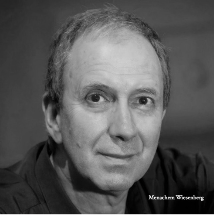
Menachem Wiesenberg, composer, arranger, pianist and educator, is one of Israel's most varied and acclaimed musicians. Mr. Wiesenberg was signed as a composer with EMI Classics (now Sony). He is winner of the 1998 and 2012 Prime Minister prize for composition, the 2010 ACUM Life Achievement Award, of 2008 Landau prize, and of the 1992 prize for outstanding achievement in composition by ACUM Ltd.
Mr. Wiesenberg's commissions and composers' awards have been received from various Festivals, Orchestras and Organizations in the U.S.A., Great Britain, Europe and Israel. His music covers a wide range of styles from orchestral, chamber and vocal works in the classical field to light music and jazz. Many of his original pieces are based on Jewish Cantillation, Ladino, Yiddish and Israeli Folk songs. His music has been performed all over the world by orchestras such as the Dallas Symphony Orchestra, the Mahler Chamber Orchestra, the Deutsche Bremen Kammerphilharmonie, the Basel Chamber Orchestra and every major Symphony and Chamber Orchestra in Israel. His music was also performed by the Berlin Philharmonic String Octet, the Borromeo String Quartet and leading Israeli ensembles such as the Jerusalem Quartet, as well as by well-known soloists including German violist Tabea Zimmerman, American clarinetist Charles Neidich, among others.
Mr. Wiesenberg’s interest in the folk music of his native land serves as a fundamental influence throughout all of his compositional activity.
His music appears internationally on several CDs, distributed most notably under the EMI, Koch International and Live Classics labels. Performances of his music have received many broadcasts in Europe and Israel. He has performed as a classical and jazz pianist in Israel, Europe and America.
Mr. Wiesenberg graduated with a Master’s degree from the Juilliard School of Music and holds a PhD from the Bar Ilan University. He is a professor and former Dean of the Composition, Conducting and Music Education Department and the Cross Disciplinary Department of Music (which he founded) at the Jerusalem Academy of Music and Dance. For almost 30 years Mr. Wiesenberg has been very active in different educational fields at the Jerusalem Music center founded by the late Maestro Isaac Stern.
(from the composer’s website)
Pro tip: This piece presents not only technical and musical challenges for the percussionist, but the daunting logistics of constantly moving between multiple “work stations” – music stands and instruments – to execute the virtuoso part. How many iPads and pedals can you use at a time?
Wiesenberg writes: The Quintet for Percussion & String Quartet is a chamber version of the Concertino for Percussion & Orchestra commissioned by the Israel Chamber Orchestra for the percussion artist Chen Zimbalista. Despite its origins, it has the distinct nature of a chamber work: the strings are equal partners throughout, the only exception being a semi-composed semi-improvised solo cadenza for the percussionist. Of the percussive instruments, the marimba is most prevalent, but various other instruments – with or without definite pitch – such as the vibraphone, cymbals and tam-tams, are also used. The Quintet, to be played as a continuous sequence, is of three sections, whose time ratios are arranged telescopically. The first is the longest and most complicated of the three, and ends with a cadenza leading to the shorter expressive and lyrical second section, in which the strings come to the fore. Robust rhythmic qualities and a lively, bouncy tempo in the perpetuum mobile vein characterize the third, even shorter, section which concludes the piece.
~ Notes by Mark Miller
Leon Turner, a native of Monroe, Louisiana, holds a Bachelor of Music Education degree from University of Louisiana at Monroe and a Master of Music degree from Southern Methodist University. He has performed in master classes conducted by noted singers such as Leontyne Price and Blanche Thebam. Turner’s operatic and oratorio experiences include roles such as Mephistopheles in Gounod’s Faust, Shaunard in Puccini’s La Boheme, Zuniga in Bizet’s Carmen, Doctor in Verdi’s La Traviata, Jake in Gershwin’s Porgy and Bess, Bonze in Puccini’s Madam Butterfly, Sarastro in Mozart’s The Magic Flute and Paul McCartney’s Liverpool Oratorio. Smaller roles and excerpts include: 2nd Philistine in Saint-Saens’ Samson et Dalilah, Sergeant in Puccini’s La Boheme, Figaro in Mozart’s Le nozze di Figaro, Leporello in Don Giovanni and Alfonso in Cosi fan tutte, the title role in Mussorgsky’s Boris Godunov and King Philip in Verdi’s Don Carlo.
Turner has performed recitals at various universities and church concert series. He was cast in the movie Leap of Faith (with Steve Martin, Debra Winger and Liam Neeson) by Paramount Pictures as a gospel singer. This movie engagement resulted in a guest appearance with Steve Martin on the Arsenio Hall Talk Show as a featured soloist.
Turner has been a finalist in the Metropolitan Opera Regional Auditions in New Orleans, Louisiana, and winner of the National Opera Association Vocal Competition in Washington, D.C. He is currently a third year DMA student in the Butler School of Music at University of Texas, Austin.
Benjamin Loeb is an accomplished conductor, soloist, accompanist, arranger, educator, arts administrator and entrepreneur. As a conductor, Loeb has lead orchestras across the US and around the world including in China, Argentina, Mexico, Czech, Ukraine, and Bulgaria. He holds degrees from the Peabody Conservatory in Conducting, the Curtis Institute, the Juilliard School, and from Harvard University. As an administrator, he has also served as Executive Director of the Quad City (Iowa) Symphony Orchestra and the Greater Bridgeport Symphony and as Music Director of the 2011 New Hampshire Music Festival. As Associate Conductor of the El Paso Symphony Orchestra, Loeb founded and served as both Executive and Music Director of the El Paso Symphony Youth. He is also the Founder and Artistic Director of the International Conducting Workshop and Festival, now in its twenty-sixth year. He is a member of Plano Music Teachers Association and lives in Plano, TX with his wife, Quyen, and three children.
Percussionist Drew Lang is a member of the Dallas Opera Orchestra, Dallas Wind Symphony, and is the principal mallet player with the Dallas Wind Symphony and percussionist for Broadway Dallas and Casa Mañana Musicals. He played the world premiere of Fly and a new staged version of Les Miz at the Dallas Theater Center and has been the regular percussionist for Broadway shows at the Winspear Opera Hall including Anything Goes, Motown the Musical, Newsies, Beautiful – The Carol King Story and Gentleman’s Guide to Love and Murder. In addition, he spent eight summers as principal percussionist for the Breckenridge Music Festival in Breckenridge, Colo., and one summer as principal percussionist of the Music in the Mountains Festival in Durango, Colo.
Drew has commissioned and premiered works for marimba in solo, chamber and concerto settings. He has premiered two concertos by G. Bradley Bodine and recorded David Maslanka’s Concerto for Marimba and Band with the University of Arizona Wind Ensemble, G. Bradley Bodine’s Namaste: Concerto for Marimba and Percussion Ensemble and Dan McCarthy’s Concerto for Marimba, Percussion Ensemble and Synthesizers with the SMU Meadows Percussion Ensemble. He has also recorded Astor Piazzolla’s Histoire du Tango with flutist Helen Blackburn on the Breckenridge Music Festival label.
Lang is on the percussion faculties at Southern Methodist University and the Dallas Community Colleges. He is also director of the "Marimba Madness" summer Junior High/High School percussion camp (www.marimbamadness.com) and was a guest artist at the 2016 University of North Texas Keyboard Percussion Symposium.
Drew is a Vic Firth Sticks and Mallets artist and a Sabian Cymbal artist.
Besides serving as concertmaster of the East Texas Symphony Orchestra, violinist Mark Miller performs with the Fort Worth Symphony and other North Texas ensembles. He is a founder and president of Mount Vernon Music, a membership-based nonprofit bringing outstanding performances of chamber music to underserved audiences in East Texas. Consistent with an emphasis on outreach to school children in rural communities, MVM has commissioned numerous musical stories for young audiences, including The Town Musicians, which was made into an illustrated book and CD with narration by Hollywood actor Will Ryan. MVM performances can be enjoyed on Mount Vernon Music’s YouTube channel. Mark also co-presented the chamber series “The Color of Sound” at Texas A&M University – Commerce, where he taught and performed as Artist-in-Residence with his wife, ETSO principal violist Ute Miller. Their duo recordings (Duo Renard) can be found on the MSR and Fleur de Son labels. Following studies at SUNY Purchase, Indiana University - Bloomington and Boston University, Mark studied with Jürgen Kussmaul in Germany, where he was assistant concertmaster in the Robert Schumann Kammerorchester of Düsseldorf and a member of the Orchester der Beethovenhalle Bonn.
Andres Bravo, originally from La Paz, Bolivia, has established his performance and teaching career in Dallas, Texas. Andres has performed as a soloist with Bolivian orchestras and in the US and played alongside members of the Escher quartet, Viano Quartet, Julius quartet, Nicola Benedetti, Aaron Boyd, Philip Quint, Jaime Laredo, and Paul Nebauer. Andres has been appointed concertmaster and principal second violin in orchestras at Interlochen, Eastern Music Festival, Texas Music Festival, Round Top Festival Institute, and Bolivia Clasica, SHSU (Sam Houston State University Symphony Orchestra, and Meadows Symphony Orchestra. He has also been a guest artist of the Erikson Center of the Arts for the past few years. Currently he holds positions with the East Texas Symphony Orchestra, Abilene Philharmonic Orchestra, McKinney Philharmonic, and he regularly plays with the Plano and Irving Symphony Orchestras.
Ute Miller is the principal violist of the East Texas Symphony, performs frequently with the Dallas and Fort Worth Symphony Orchestras, and has appeared as a soloist with the East Texas Symphony Orchestra. A founder and the Executive Director of Mount Vernon Music Association, Ute performs with her husband Mark in the violin-viola ensemble Duo Renard, which was brought to Texas with a National Endowment for the Arts Rural Residencies chamber music grant. She also produces the Color of Sound series at Texas A&M Commerce, where she was Artist-in-Residence. Ute’s musical studies include the prestigious Konzertexamen diploma from the Robert Schumann Hochschule Düsseldorf, and a year at Boston University
as a student of Raphael Hillyer. In addition to playing with the Frankfurt Radio Symphony, she served for seven years as assistant principal violist of the Gürzenich Orchester/Cologne Philharmonic, and for eight years as principal violist of the Dallas Opera Orchestra.
Cellist Bree Ahern is a versatile solo and chamber musician committed to building community through performing, teaching, and collaborating across art forms. She currently performs with Kinetic Ensemble, a Houston-based conductor-less chamber orchestra committed to performing diverse, underrepresented, and newly composed classical music. Keen on interdisciplinary collaborations, she has worked with dancers, artists, and scientists in projects with Musiqa, Loop38, and Da Camera of Houston, among others. In DFW, she performs regularly with the Fort Worth Symphony and has appeared with Opus Nova, Spectrum Chamber Music Society, and Broadway at Bass Hall. Her festival appearances include the Louis Moreau Institute for Contemporary Music, Cabrillo Festival of Contemporary Music, Round Top Festival Institute, Hot Springs Music Festival, and Green Mountain Chamber Music Festival, with select performances featured on WQXR and New Music USA. She is a graduate of Rice University, where she studied as a Brown Foundation Fellow under Norman Fischer on a full scholarship.
